Vectorbirds | Defense & Security UAV Engineering
Defense UAV Systems for ISR, Reconnaissance and Mission Networks
Defense systems need reliability, modular maintenance, and integration-ready design.
Discuss a defense UAV requirement confidentially

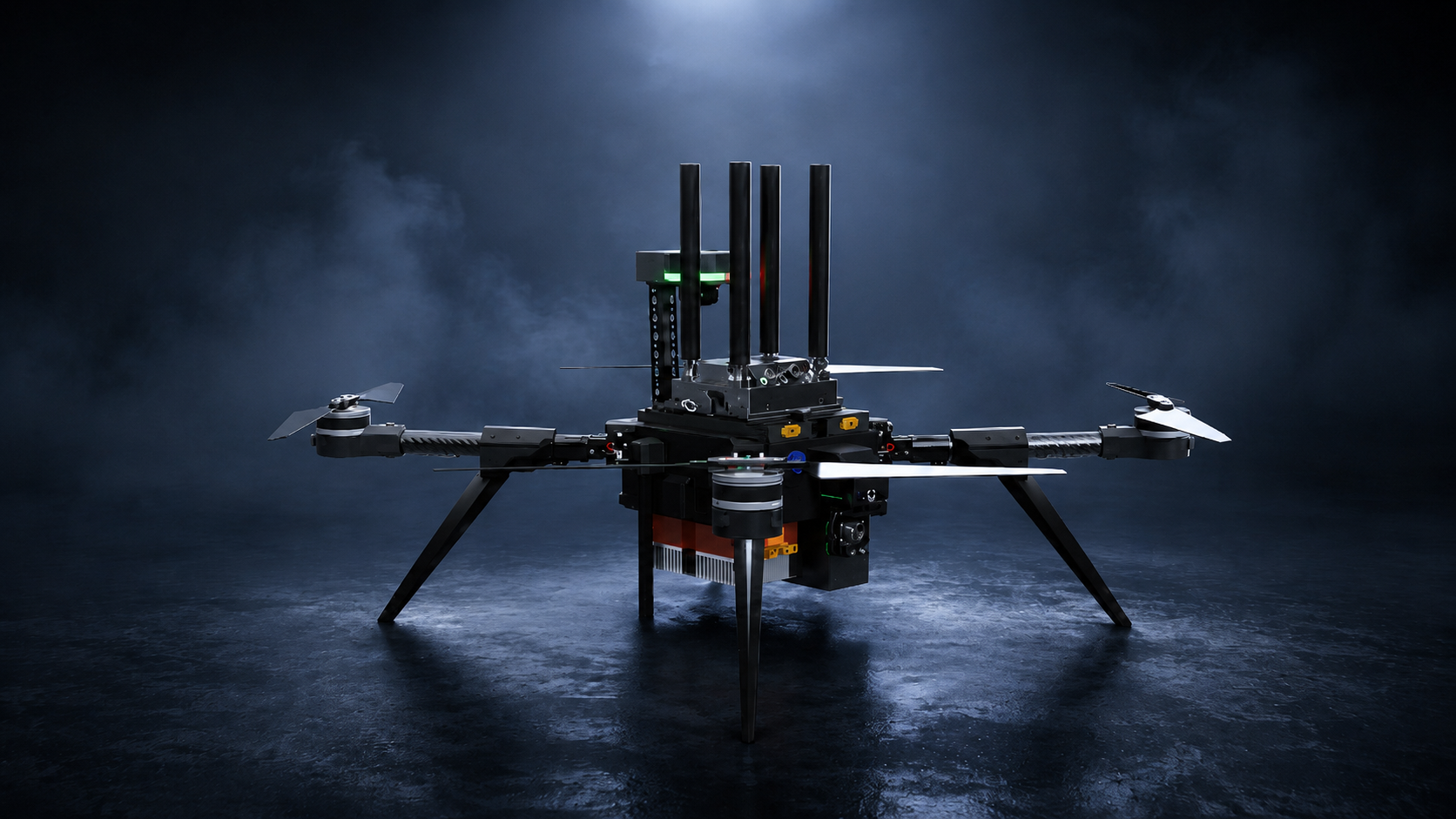
Vectorbirds develops and integrates mission-focused UAV systems for defense, security and research organizations. Our architectures combine aircraft, payload, communications, power supply, ground control and operating logic into maintainable systems for ISR, reconnaissance, airborne relay and tethered operations.
Mission-oriented UAV engineering
Operational users rarely need an isolated aircraft. They need an integrated capability that works with sensors, networks, command environments and real deployment constraints. Vectorbirds supports systems engineering, platform adaptation, payload integration, communications architecture, prototype development and technical validation.
Learn more about Vectorbirds as a German UAV manufacturer and the platforms and development evidence behind these systems.
We deliver modular UAV systems built for integration with mission operations and existing command contexts. If the required capability is not available as a market-ready standard product, our UAV development services can define and build the missing technical solution.
ISR and reconnaissance
Intelligence, surveillance and reconnaissance missions require a reliable relationship between flight platform, EO/IR or specialist sensors, data link, operator workflow and information delivery. Vectorbirds configures these elements around the mission profile, taking endurance, range, transport, setup time, maintainability and interface requirements into account.
- EO/IR and project-specific sensor integration
- airborne computing and mission payloads
- secure and resilient communications concepts
- modular field-serviceable assemblies
- integration with customer operating and network environments
Airborne relay and resilient communications
Elevated UAV relay nodes can extend radio and data coverage across terrain obstacles or long distances. Vectorbirds combines suitable aircraft, communications modules, data links and power concepts into an integrated system architecture. Explore our dedicated relay UAV capabilities.
Tethered UAV for persistent availability
Tethered aircraft can provide long-duration sensor positions or temporary network nodes with predictable power and data connectivity. Vectorbirds develops tethered architectures for persistent observation, communications support and stationary mission profiles. See our tether UAV solutions.
Maintainable architecture instead of a closed black box
Defense and institutional users need systems that remain repairable, adaptable and technically controllable over time. Vectorbirds focuses on modular assemblies, accessible interfaces and service-friendly construction. Payloads, communications components and software functions can therefore be adapted to project needs and evolved throughout the lifecycle.
Open interfaces for payloads, data links and C2 integration
Defense UAV systems must fit existing sensor, communications and command environments. Vectorbirds can design mechanical, electrical and software interfaces for payloads, IP networks, video streams, telemetry, ground control and external C2 components. Standards or NATO compliance are stated only for interfaces and evidence that have actually been assessed.
Resilience in contested navigation and communications environments
GNSS interference, restricted data links and changing RF conditions should be considered at system-architecture level. Depending on the project, alternative navigation inputs, local mission logic, buffering, defined return and abort procedures, MANET/mesh communications or other redundancies can be assessed and integrated. Performance remains specific to the platform, sensors, software, data link and tested configuration.
Lifecycle, maintainability and technical evolution
Procurement programmes need more than an aircraft. They require traceable configurations, replaceable assemblies, documented interfaces and a planned path for upgrades. Vectorbirds can consider maintenance, spares, training and change requirements during development; scope and availability are agreed for each programme.