Own UAV platforms | Development and system integration in Germany
UAV manufacturer in Germany for professional mission systems
Vectorbirds develops its own unmanned aerial vehicle (UAV) platforms and integrates them into project-specific systems. Based in Bilshausen, Germany, we bring together aircraft design, payloads, communications, software and ground control for defence, public-sector, research and industrial applications.
Our AERIS and VECTIS platforms provide starting points for different mission requirements. Where a standard configuration is not sufficient, we assess the required adaptations with the customer. The deliverable is a defined system configuration, with performance, interfaces and testing agreed for that project.


What we develop and integrate
A manufacturer relationship should make clear which parts of the system can be adapted, who is responsible for integration and how the resulting configuration will be assessed. Vectorbirds combines its own platform development with customer-specific engineering across five areas:
Aircraft and modular assemblies
platform design, mechanical adaptations, payload mounting and replaceable assemblies, with attention to access, maintenance and the intended operating environment.
Payload integration
assessment of mounting, mass distribution, power supply, data interfaces and control for cameras, sensors, communications equipment or customer-supplied components.
Communications and ground control
integration of video, telemetry, data links, operator interfaces and connections to the customer's existing systems.
Software and mission functions
project-specific operating logic, automation and onboard computing. Artificial intelligence functions can be considered where the task, available data and computing resources support them.
Prototyping and technical assessment
iterative development, integration testing and documentation of the configuration and its operating limits.
The scope is agreed for each project. Components, software and interfaces are selected for the requirement; describing Vectorbirds as a German manufacturer does not imply that every component is manufactured in Germany.
For detailed engineering work, explore our UAV development and integration services and system architecture.
Own platforms and mission modules
AERIS Recon S7:
a compact reconnaissance platform for mobile teams, with sensor and data-link choices assessed for the intended mission.
VECTIS:
a modular platform family covering reconnaissance, airborne relay and project-specific payload integration.
TELEVATOR:
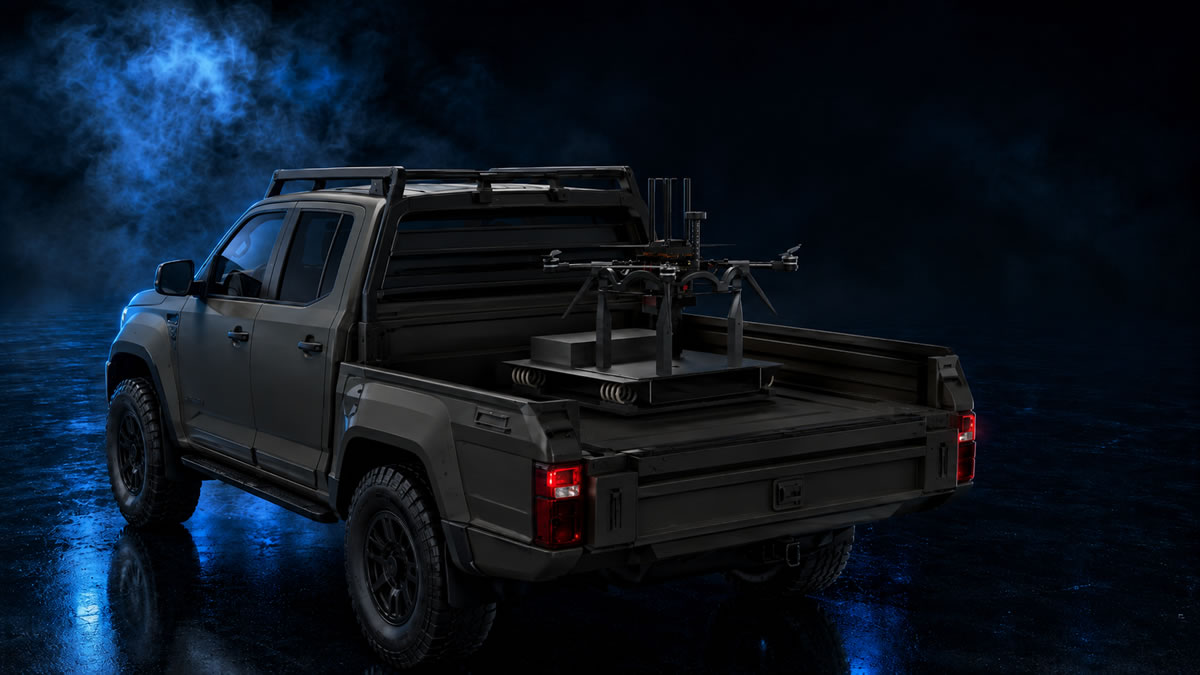
a mission module for integrating tethered UAV operation with suitable deployment platforms, including vehicle-based configurations.
Tethered systems:
project-specific combinations of aircraft, cable-based power and data connectivity for observation or communications tasks.
Platform suitability, payload capacity, endurance and interface support depend on the selected configuration. Use the current public product information as the starting point, then confirm the specification for your project.
Defence, public-sector, research and industrial requirements
For defence-related projects, the engineering task can include tactical reconnaissance, sensor integration, airborne communications or connections to existing mission systems. The aircraft must be considered together with its payload, data link, ground control and operating procedures.
Research and industrial customers may need a sensor carrier, an experimental configuration, infrastructure observation or a specialised communications platform. These requirements can call for different integration choices rather than simply a different aircraft size.
See our defence UAV engineering overview, tactical reconnaissance applications and development work for research institutions. Suitability and performance must be established for the actual configuration and operating conditions.
Documented development, with a defined scope
Our projects and development evidence page brings together publicly documented work and explains what each source supports. It includes the compact lightweight drives project with the Fraunhofer Institute for Machine Tools and Forming Technology, officially certified research and development activity for the stated project period, and registered technical rights in the connected company environment.
These records support specific development activities. They are not a blanket product approval, a procurement endorsement or evidence that every current configuration has the same capabilities. Rights ownership and the scope of each record are stated separately on the evidence page.
From requirement to an agreed system configuration
Define the task
describe the mission, payload, operating environment, transport constraints and information the operator needs.
Assess the configuration
select a suitable platform and identify mechanical, electrical, communications and software adaptations.
Develop and evaluate
integrate the agreed components, assess interfaces and operating behaviour, and record findings against the project requirements.
Agree the deliverables
define the configuration, documentation, operating limits and any required maintenance, training or further development scope.
This process distinguishes an available product configuration from work that still requires development or validation. Schedule, deliverables and acceptance criteria are agreed individually.
Questions about working with Vectorbirds
Do you only supply standard drones?
No. Vectorbirds develops its own platforms and can undertake customer-specific adaptations and integration. Whether an existing configuration or a development project is appropriate depends on the requirement.
Can we specify our own payload or communications equipment?
Yes. We assess its mechanical, electrical and software requirements against the platform and mission. Compatibility is confirmed for the agreed configuration, not assumed for every component.
Are autonomous or AI-supported functions standard on every platform?
No. Automation and artificial intelligence functions are project-specific. Their scope depends on sensors, computing resources, software, operating limits and the evaluation required for the intended use.
What information should we provide first?
Start with the mission, payload, required data, communications environment and interfaces. Include transport and operating constraints, any existing equipment, and the evidence or acceptance criteria your project requires.