Tethered UAV engineering for persistent mission availability
Vectorbirds designs mission systems where endurance, reliability and maintainability are aligned for operational continuity. Tethered aircraft can support persistent sensing, elevated communications, temporary network nodes and research experiments with predictable power and data connectivity.
The overall architecture combines aircraft, tether, ground power, data connection, payload and safety logic. Vectorbirds can adapt the platform and integrate customer-specific sensors, communications equipment and onboard computing for defense, industrial, university and applied-research projects.
Explore related defense UAV systems, our UAV development services and payload integration capabilities.
Tethered UAV System | Cable-Connected UAVs & TELEVATOR Integration
Tethered UAV Systems for Persistent Missions and Mobile Platform Integration
Vectorbirds develops and integrates tethered UAV systems and cable-powered drone platforms for stationary and semi-stationary missions, relay applications, observation, mobile platform integration and cable-based power and data connectivity.
Assess a tethered UAV requirement
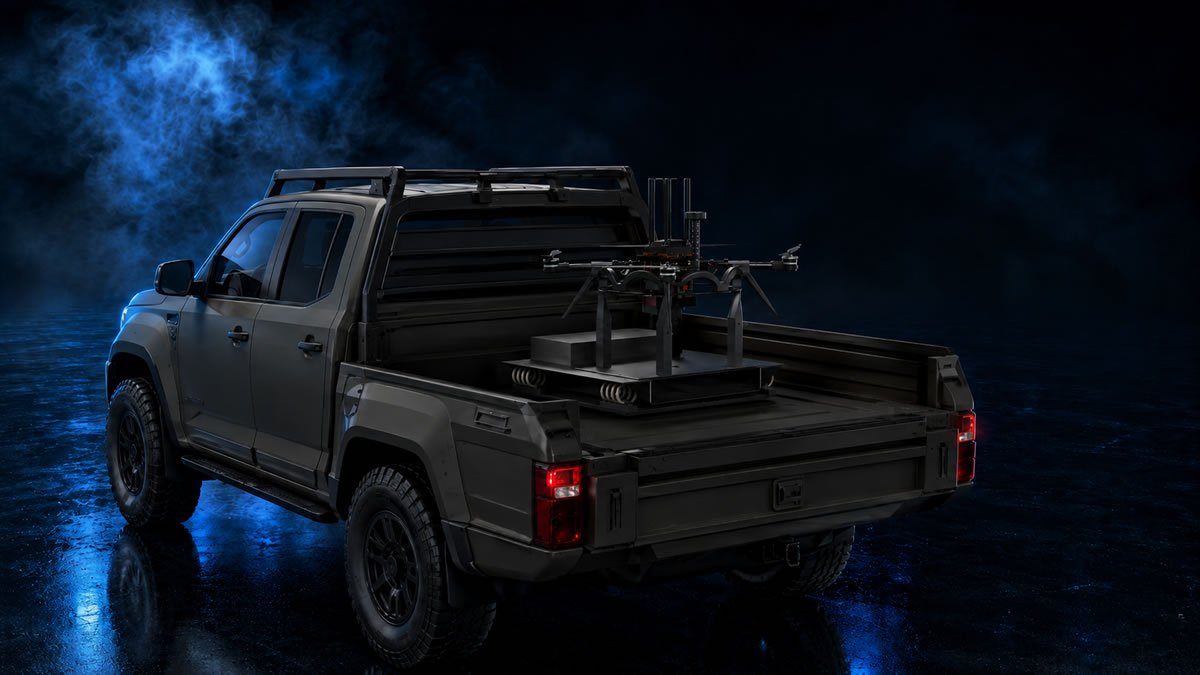
A tethered UAV is supplied through a cable with power and, depending on the system architecture, also with fibre-optic or data connectivity. This enables a UAV to operate for extended periods at a defined mission position, for example for reconnaissance, communications support, temporary relay points or monitoring of critical areas.
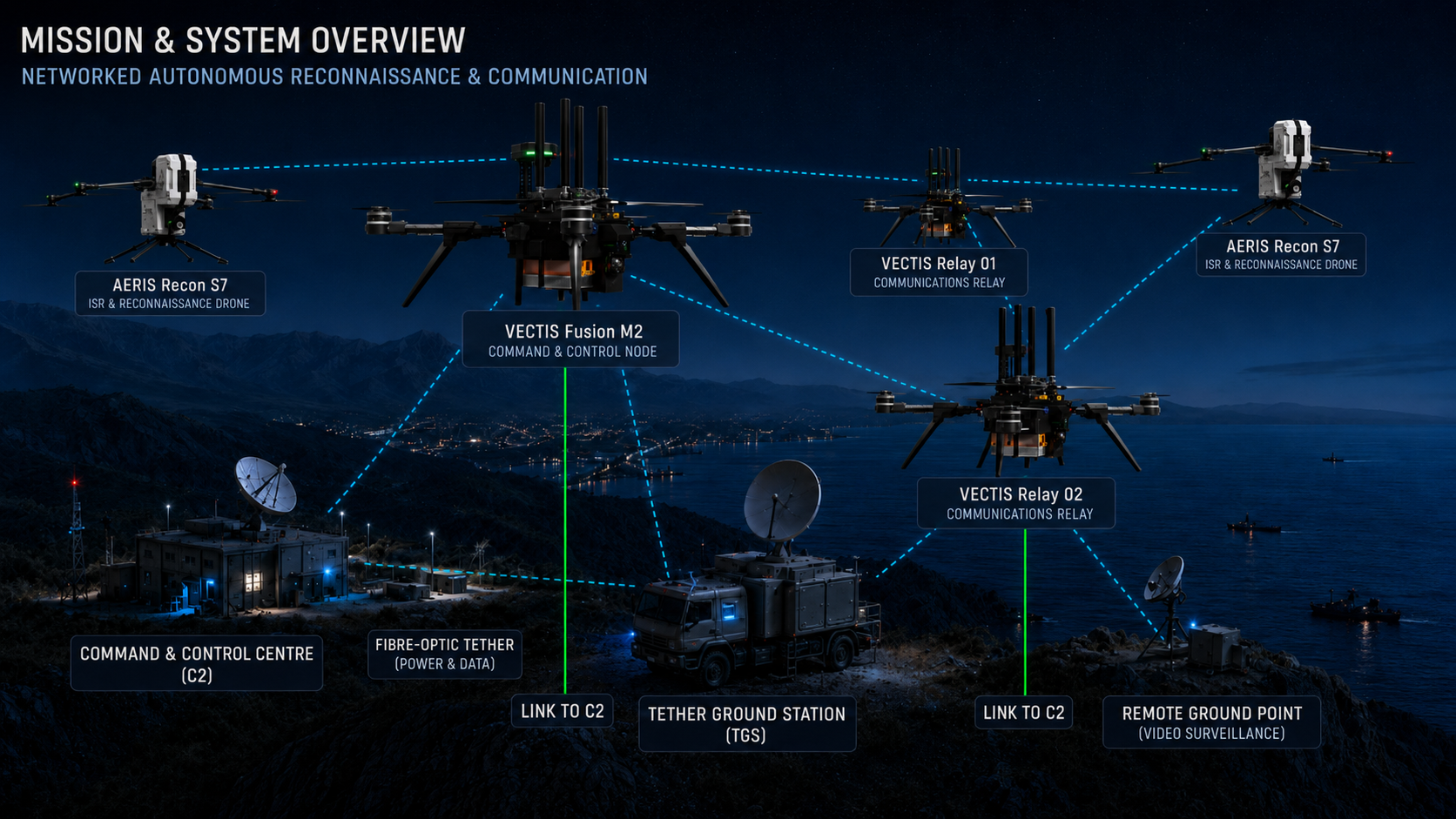
Vectorbirds combines tether technology with its own UAV platforms, TELEVATOR integration, IP-based data-link architecture, relay hardware, buffer-battery concepts and project-specific system integration. This creates cable-connected UAV systems that can be used not only as flying cameras, but as networked mission components within mobile or stationary system architectures.
Basic Principle | Cable-Based Power and Data Connectivity
What is a tethered UAV?
A tethered UAV is an unmanned aerial vehicle that remains connected to a ground station, vehicle or mobile platform during operation. This tether cable can transmit power and, depending on the system design, also provide fibre-optic or data connectivity.
The key difference compared with a purely battery-powered UAV is the operating mode. While a battery-based system is limited by available battery capacity, a tethered UAV can remain at a defined position for significantly longer stationary or semi-stationary missions. This makes it particularly relevant for observation, communications support, relay tasks and integration on mobile platforms.
Cable-based power supply
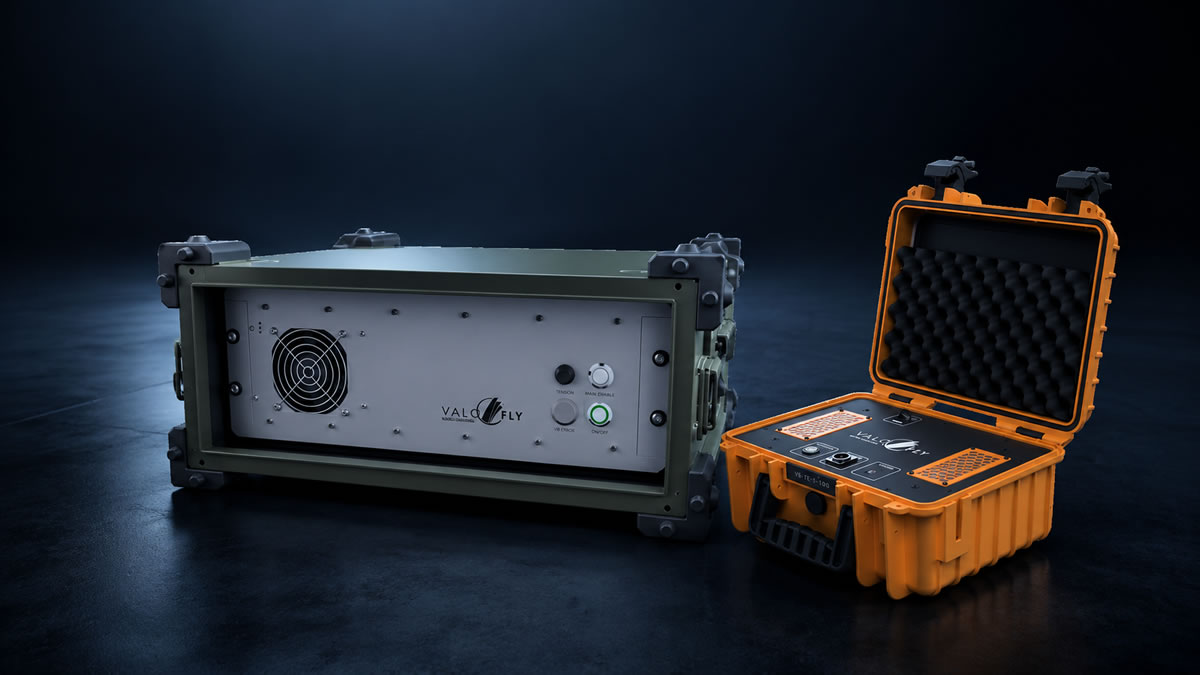
Power is supplied through the tether cable from a ground station, vehicle or suitable platform. A buffer battery on board the UAV can support peak loads, transitions or controlled safety procedures.
Stable data connectivity
Depending on the configuration, the tether system can also provide fibre-optic or network connectivity. This supports stable transmission of video streams, telemetry, payload data or IP-based system connections.
Defined mission position
A tethered UAV is typically operated at a fixed or slowly changing mission position. This makes it suitable for observation tasks, temporary communications points, platform protection or local situational awareness.
For professional applications, a tethered UAV is therefore not simply a drone with a cable, but a cable-connected UAV system consisting of flight platform, power supply, data path, ground station, safety logic, payload and integration environment.
Mission Profiles | Observation, Relay & Stationary UAV Presence
Mission profiles for tethered UAV systems
Tethered UAV systems are particularly suitable for tasks where a UAV needs to remain available at a defined position for extended periods. The focus is on stationary or semi-stationary mission profiles in which observation, data transmission, relay function, platform protection or local situational awareness are more important than wide-area flight movement.
Depending on the platform, payload, data link and tether configuration, a cable-connected UAV system can be configured for different applications. Vectorbirds considers not only the flight platform, but also power supply, data path, operator concept, payload, communications architecture and integration environment.
Stationary observation
For observation tasks, a tethered UAV can provide an elevated sensor position. This allows areas, access routes, terrain sections or temporary mission zones to be monitored from the air for extended periods.
Relay and communications tasks
As an elevated relay position, a tethered UAV can support data links, radio connections or IP-based communications paths. This is particularly relevant for mobile units, vehicles or temporary operational architectures.
Temporary situational awareness
During time-limited missions, a cable-connected UAV can provide local situational awareness without requiring frequent battery changes or short flight times to be factored into mission planning.
Protection of mobile platforms
On vehicles, UGVs or mobile system carriers, a tethered UAV can support perimeter observation, communications support or an extended sensor position, provided that platform, installation and mission profile are aligned.
Critical infrastructure
For industrial or security-relevant facilities, a tether system can provide temporary elevated observation, technical monitoring or communications support without requiring permanent mast or tower infrastructure.
Testing and system integration
Tethered UAVs are also suitable for testing sensors, data links, relay hardware, ground-control components or customer-specific integrations when a controlled and longer-available UAV position is required.
The specific configuration depends on mission altitude, wind, payload, tether cable, data link, power demand, centre of gravity and safety concept. Vectorbirds therefore evaluates tethered UAV systems as project-specific complete systems.
Vectorbirds Mission Modules | TELEVATOR & TETHER
TELEVATOR and TETHER as system building blocks
Vectorbirds does not treat tethered UAV systems as isolated components, but as part of a coordinated UAV system architecture. TELEVATOR and TETHER have different roles: TELEVATOR describes the mobile platform and integration solution, while TETHER covers the cable-based power and data connectivity of the UAV.
In combination, both system building blocks enable stationary or semi-stationary UAV missions on vehicles, mobile platforms or remote operating positions. The key requirement is the coordinated integration of flight platform, tether cable, power supply, data path, payload, buffer battery, operator concept and safety logic.
TELEVATOR
TELEVATOR is the Vectorbirds solution for mobile UAV platform integration. It can accommodate UAV systems on suitable vehicles or mobile system carriers and make them usable for elevated sensor positions, relay tasks, tethered operation and vehicle-related mission profiles.
TETHER
The Vectorbirds TETHER system provides the cable-based connection between UAV and ground or platform component. It can support power supply, fibre-optic or data path, tether management and technical integration into the respective mission architecture.
For professional users, this creates a cable-connected UAV system that can be configured for observation, communications, relay, platform protection, temporary situational awareness or mobile system integration depending on the project.
Relay Operation | Tethered UAV as Elevated Communications Position
Tethered UAV and relay UAV
A tethered UAV can be used not only for observation tasks. In a suitable configuration, it can also serve as an elevated communications and relay position. Especially in mobile operational architectures, a tethered UAV can support data links, radio connections, IP-based networks or MANET/mesh communications.
For these mission profiles, tethered operation is particularly relevant because the UAV can remain at a defined position for extended periods. This turns the aircraft from a briefly available aerial platform into a stationary or semi-stationary system node for communications, relay and situational-awareness data transmission. The broader mission logic is described on the overview page for relay UAV systems for communications support.
Elevated relay position
Through its elevated position, a tethered UAV can support radio or data-link connections, improve line of sight and provide temporary communications points for mobile units, vehicles or remote forces.
IP-based system connectivity
Relay and tether systems can be integrated into IP-based communications architectures. This allows telemetry, video streams, payload data, ground-control components and customer-side interfaces to be networked on a project-specific basis.
MANET and mesh
Mesh-capable data links and MANET components can make a tethered UAV usable as a temporary network node. The specific integration depends on radio module, antenna concept, data rate, range requirement and mission environment.
The VECTIS Relay M2 is designed for these communications and relay tasks. In combination with TETHER or TELEVATOR, it can be assessed and integrated on a project-specific basis as a tethered relay UAV for stationary or semi-stationary communications support.
Technical Configuration | Power, Wind, Payload & Data Path
Technical requirements for tethered UAV systems
A tethered UAV must be assessed differently from a purely battery-powered UAV. In addition to flight platform, payload and flight control, tether cable, power supply, data path, cable weight, wind load, tether angle, buffer battery, centre of gravity and safety logic are decisive for the technical configuration.
Especially in professional applications, a simple hover or weight calculation is not sufficient. Wind, gusts, cable drift, diagonal pull, mission altitude, payload configuration and thermal reserves must be considered together. Vectorbirds therefore evaluates tether systems as project-specific UAV system integration rather than as a simple accessory component.
Power supply and buffer battery
Power is supplied through the tether system. An onboard buffer battery can absorb peak loads, support transitions and enable controlled safety or landing scenarios. In tethered operation, it does not replace the primary power supply.
Tether cable and cable weight
The tether cable influences usable mission altitude, wind load, diagonal pull and mechanical load on the UAV. Cable weight, fibre-optic content, strain relief and tether management must match the platform and mission profile.
Wind, gusts and tether angle
As wind increases, the load on cable and UAV rises. The permitted mission altitude may therefore need to be limited depending on wind conditions in order to account for cable wind load, diagonal pull, tether angle and operating reserves.
Payload and centre of gravity
Cameras, relay modules, antennas, compute units or customer-specific payloads affect mass, centre of gravity, power demand, aerodynamic drag and operating reserves. Each payload configuration must therefore be assessed technically.
Data path and system connectivity
Depending on the configuration, video streams, telemetry, payload data, IP networks, ground-control components or relay connections can be connected through fibre optics, data links or combined communications paths.
Safety and operating logic
For professional tethered missions, defined operating limits, emergency logic, controlled landing modes, buffer-battery strategy, system monitoring and clear operator logic are central parts of the system configuration.
Realistic tether configuration therefore always means assessing mission altitude, wind profile, payload, power demand, cable parameters, data connectivity and platform integration together. Generic altitude or wind claims are only of limited value without a specific configuration.
Operating Characteristics | Endurance, Wind & System Limits
Advantages and limitations of tethered UAV systems
Tethered UAV systems provide clear advantages when a UAV needs to remain available at a defined position for an extended period. They can significantly increase mission endurance, provide stable data connectivity and serve as an elevated sensor or relay position. At the same time, tether systems remain technical complete systems with real operating limits.
The key factor is a realistic assessment of the specific configuration. Mission altitude, wind, gusts, tether cable, payload, power demand, centre of gravity, platform integration and safety logic together determine which operating ranges are useful and technically reliable.
Extended mission endurance
Cable-based power supply allows a UAV to remain at a mission position for significantly longer than in purely battery-powered operation. The actual mission duration depends on system design, platform, power supply and safety concept.
Stable sensor position
A tethered UAV can provide an elevated and repeatable sensor position. This is particularly useful for observation, situational awareness, communications support or temporary monitoring of defined areas.
Controlled operating area
The cable-based connection keeps the operating area spatially limited. This can be an advantage for stationary tasks, platform protection, vehicle-area observation or temporary mission sites.
Wind-dependent mission altitude
In stronger wind, the permitted tether altitude may need to be limited in order to account for cable wind load, diagonal pull, tether angle and operating reserves. Generic altitude claims are not technically reliable without wind and payload assessment.
Payload-dependent reserves
Heavy cameras, relay modules, antennas or compute units reduce available power, centre-of-gravity and wind reserves. Payloads in tethered operation must therefore always be assessed together with the platform.
Not a replacement for every UAV mission
Tethered UAV systems are particularly strong for stationary and semi-stationary tasks. For wide-area search, tracking or route-based flights, a free-flying battery-powered system may remain the more suitable solution depending on the mission profile.
Vectorbirds therefore defines tether performance data depending on the configuration. At moderate wind, greater tether altitudes are possible; in stronger wind, with higher payload or unfavourable wind profiles, mission altitude may be limited to reduce cable wind load and diagonal pull.
Mobile Platform Integration | Vehicles, UGVs & Remote Operating Positions
Integration into vehicles and mobile platforms
Tethered UAV systems can provide significant operational value when integrated into vehicles, UGVs, mobile platforms or temporary mission sites. This creates an elevated sensor or relay position that can be operated close to the respective mission platform.
For reliable platform integration, it is not sufficient to mechanically place a UAV on a vehicle. Power supply, tether management, data connectivity, launch and landing area, operator concept, safety logic, payload, centre of gravity, environmental conditions and integration into the existing system architecture are decisive.
Vehicle-related UAV presence
A tethered UAV can be operated near a vehicle or mobile system carrier and provide an elevated observation or communications position without leaving the operational area on a wide scale.
TELEVATOR integration
TELEVATOR can serve as a mobile platform solution to accommodate, guide and operate UAV systems on suitable vehicles or system carriers for tethered, observation or relay profiles.
Remote operating architecture
Depending on the project, a tether or TELEVATOR solution can also be operated from a remote position. Operation, data connectivity and power supply can be integrated through suitable network, fibre-optic or platform components.
Sensor and relay payloads
EO/IR cameras, relay modules, antennas, data-link components or customer-specific payloads must be integrated so that mechanical installation, power supply, data path and operation work together.
Launch, landing and safety
Vehicle-related tethered missions require clear launch and landing logic, defined operating limits, tether guidance, safety distances and a coordinated operator logic between UAV, platform and operator.
System connectivity and data paths
Video streams, telemetry, relay data, IP networks, ground-control components and customer-side interfaces can be integrated into the existing vehicle or platform architecture on a project-specific basis.
Vectorbirds therefore evaluates mobile tether integration in relation to vehicle, platform, UAV configuration, payload, data link, tether system, mission altitude and operating environment. The goal is a technically traceable complete system, not merely a mechanical installation.
FAQ | Tethered UAV, Tether System & TELEVATOR
Frequently asked questions about tethered UAV systems
What is a tethered UAV?
A tethered UAV is an unmanned aerial vehicle that remains connected to a ground station, vehicle or platform during operation. The cable can transmit power and, depending on the system design, also provide fibre-optic or data connectivity.
What advantages does a tether system provide?
A tether system can support longer mission duration, stable data paths and controlled UAV presence at a defined position. This is particularly relevant for observation, relay, platform protection and stationary or semi-stationary mission profiles.
Can a tethered UAV fly indefinitely?
No. Mission duration can be significantly increased compared with purely battery-powered operation, but remains dependent on power supply, platform, payload, tether system, thermal reserves, wind conditions, safety logic and maintenance intervals.
What mission altitude is possible with a tethered UAV?
The possible mission altitude depends on tether cable, cable weight, wind, gusts, payload, platform performance, tether angle and safety reserves. In stronger wind, the permitted altitude may be limited to reduce cable wind load and diagonal pull.
Can a tethered UAV be used as a relay UAV?
Yes. In a suitable configuration, a tethered UAV can be used as an elevated relay position for data links, radio connections, IP networks or MANET/mesh communications. The specific implementation depends on payload, data link and mission architecture.
What role does the buffer battery play?
An onboard buffer battery can absorb peak loads, support transitions and enable controlled safety or landing modes. In tethered operation, it should be understood as a redundancy and safety component, not as the primary mission power source.
What is the difference between TELEVATOR and TETHER?
TELEVATOR describes the mobile platform and integration solution for UAV systems. TETHER refers to the cable-based power and data connectivity between UAV and ground or platform component. Both building blocks can be combined on a project-specific basis.
For which projects does a tethered UAV make sense?
A tethered UAV makes sense when a UAV needs to remain available at a defined position for observation, communications, relay, platform protection, temporary situational awareness or mobile system integration over an extended period.
Project Request | Tethered UAV & TELEVATOR Integration
Discuss your tethered UAV project with Vectorbirds
Are you planning a tethered UAV for stationary observation, relay, mobile platform integration, vehicle connectivity or a project-specific UAV system with cable-based power and data connectivity? Vectorbirds supports technical assessment, system configuration, payload integration, data-link architecture and integration into existing mission or platform environments.
Describe your mission profile, required payload, planned mission altitude, communications requirements, platform environment and operating limits. We assess which UAV platform, tether configuration, TELEVATOR integration, power supply, data connectivity and safety logic makes technical sense.